UI Packs
Mint Dialogue Kit
15 flat dialogue components for dark interfaces — blue-grey with mint green accents. SVG plus transparent PNG at 1x, 2x and 4x.
About this pack
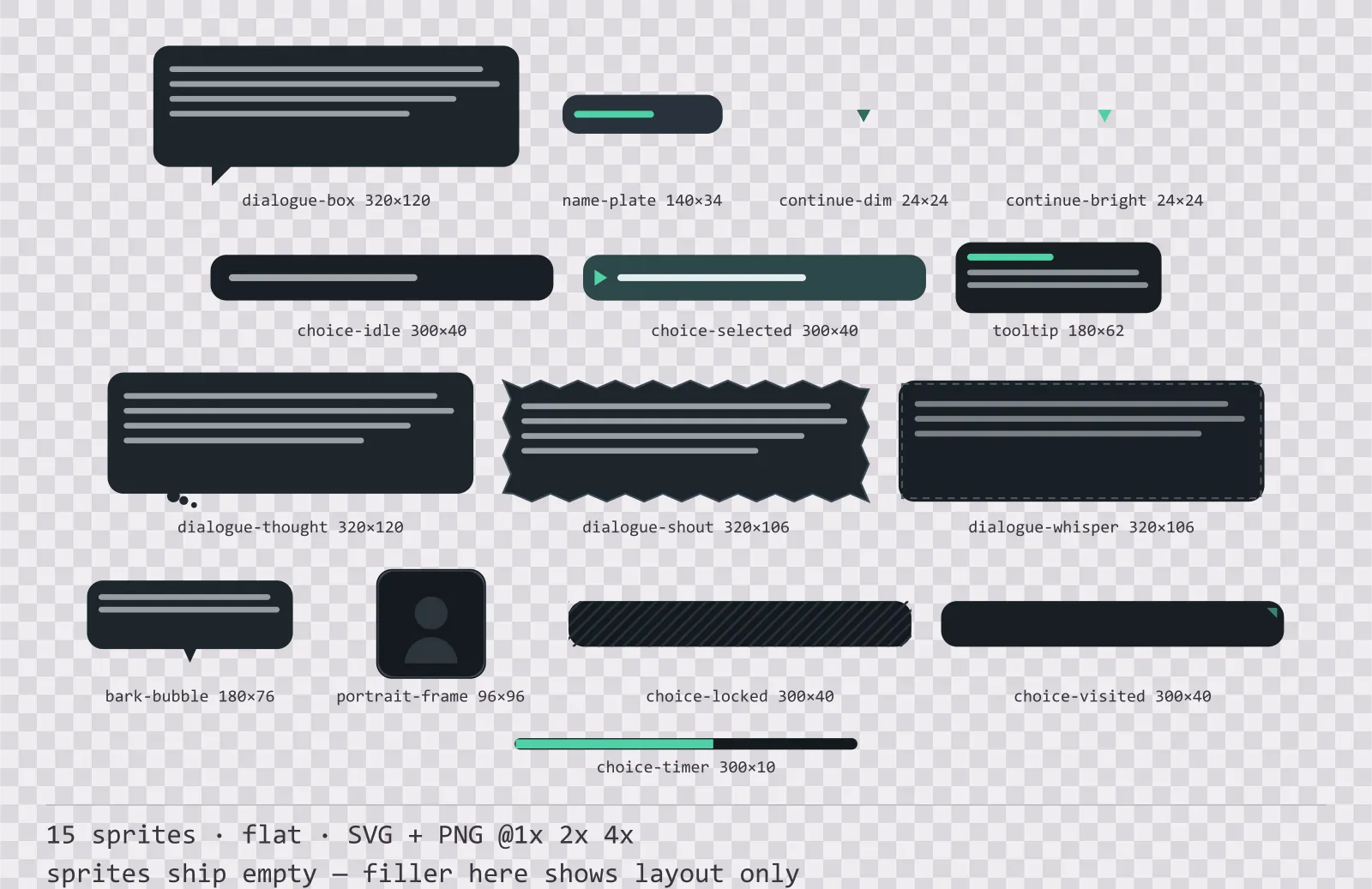
Mint Dialogue Kit is a set of 15 dialogue components drawn in the flat style, where there are no outlines and no shading at all. It contains speech, thought, shout and whisper boxes, a world-space bark bubble, a speaker name plate and a portrait frame, dim and bright continue indicators, idle, selected, locked and visited choice rows, a timed choice bar and a tooltip panel.
A dialogue box is the single most-read surface in a story game, and it is not the same thing as a window panel: it needs a tail that points at whoever is talking, a name plate that sits on top of it without covering the first line, and a continue indicator with two frames so the engine can blink it.
Depth comes only from a layered soft shadow — three stacked passes rather than a blur filter, because some SVG rasterisers scale a blur wrongly and the 4x PNG comes out as a smear. Everything else is one solid colour.
Inside that style this is the Mint reading of it: a dark interface on a blue-grey palette with mint green accents, built around a header band across the top of the frame, square-cornered buttons at 120x36, tick-marked bars divided into 12 segments, and two-tone icons on a 16px grid. Those measurements are why two families can share an art style without being interchangeable: the style decides how an edge is drawn, the numbers decide what the interface is for.
The selected choice row is marked by an indent and a pointer rather than by a colour change, so the state survives a colourblind mode and a greyscale shader. That matters more here than anywhere else: choosing the wrong dialogue option is a mistake a player cannot undo.
Every sprite ships as an editable SVG and as transparent PNG at 1x, 2x and 4x, so you can drop the PNGs straight into an engine or open the vector and change a colour. Built to the same measurements as the rest of the Mint family, which means this kit and the Mint panel kit line up without either being resized. A good fit for minimal and mobile interfaces.
Download
Direct link · no sign-up · no wait pageComplete set — SVG sources, PNG exports at 1x/2x/4x, licence and readme

How to use it
- Nine-slice the dialogue box on its flat regions and leave the tail in the fixed corner, or it stretches into a wedge when the box grows.
- Blink the continue indicator by alternating the dim and bright frames at about 2 Hz — the two frames exist so you do not have to tint one at runtime.
- Anchor the name plate to the top-left of the dialogue box with a negative offset of about half its height so it overlaps the frame.
License
Creative Commons Zero 1.0 — Public domain. No credit required. Full terms · What this means in practice
Also browse
More UI Packs
See all →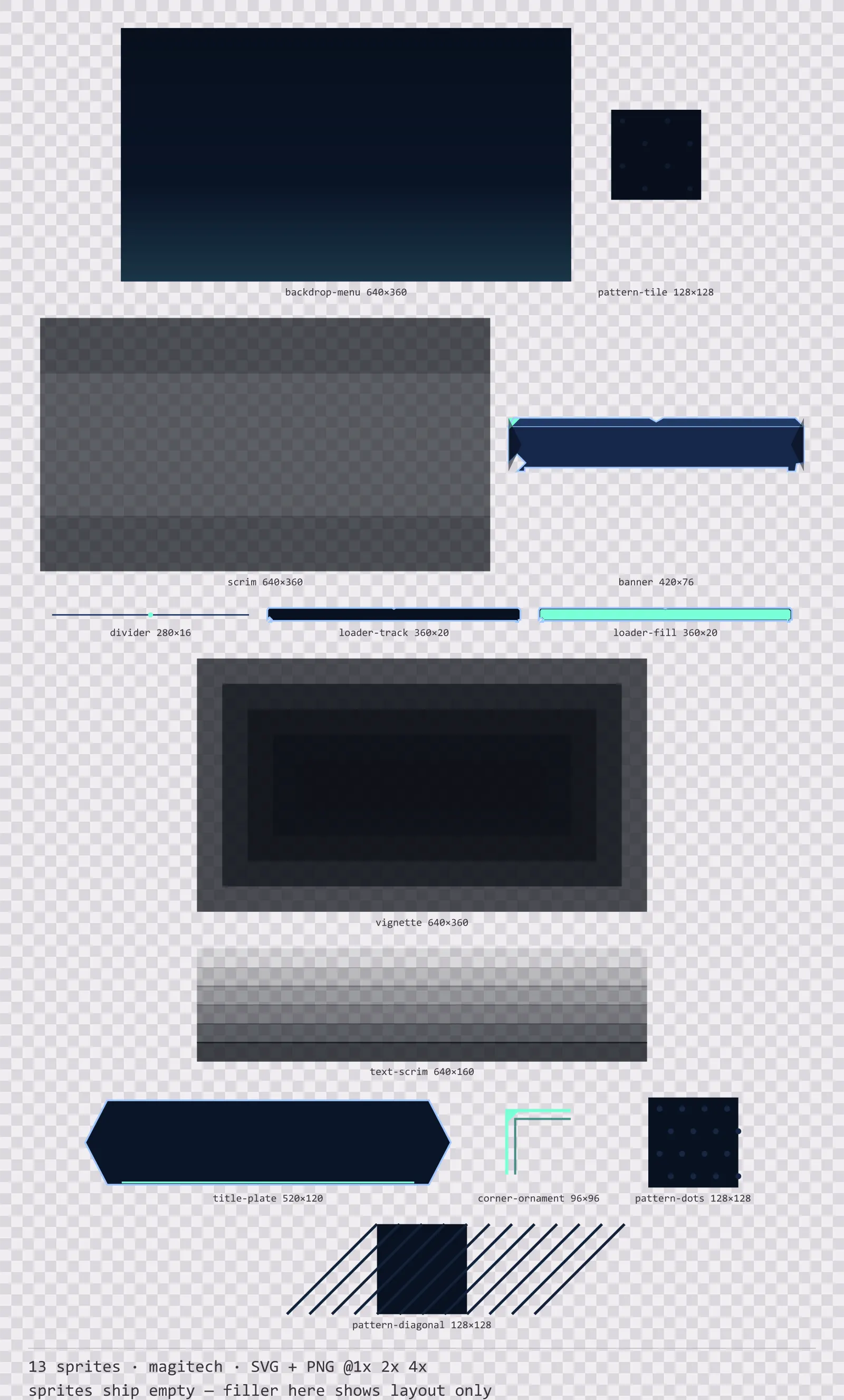
Aetherlab Backdrops
13 magitech background and overlay pieces for dark interfaces — lab navy with aether cyan accents. SVG plus transparent PNG at 1x, 2x and 4x.
Aetherlab Card Frames
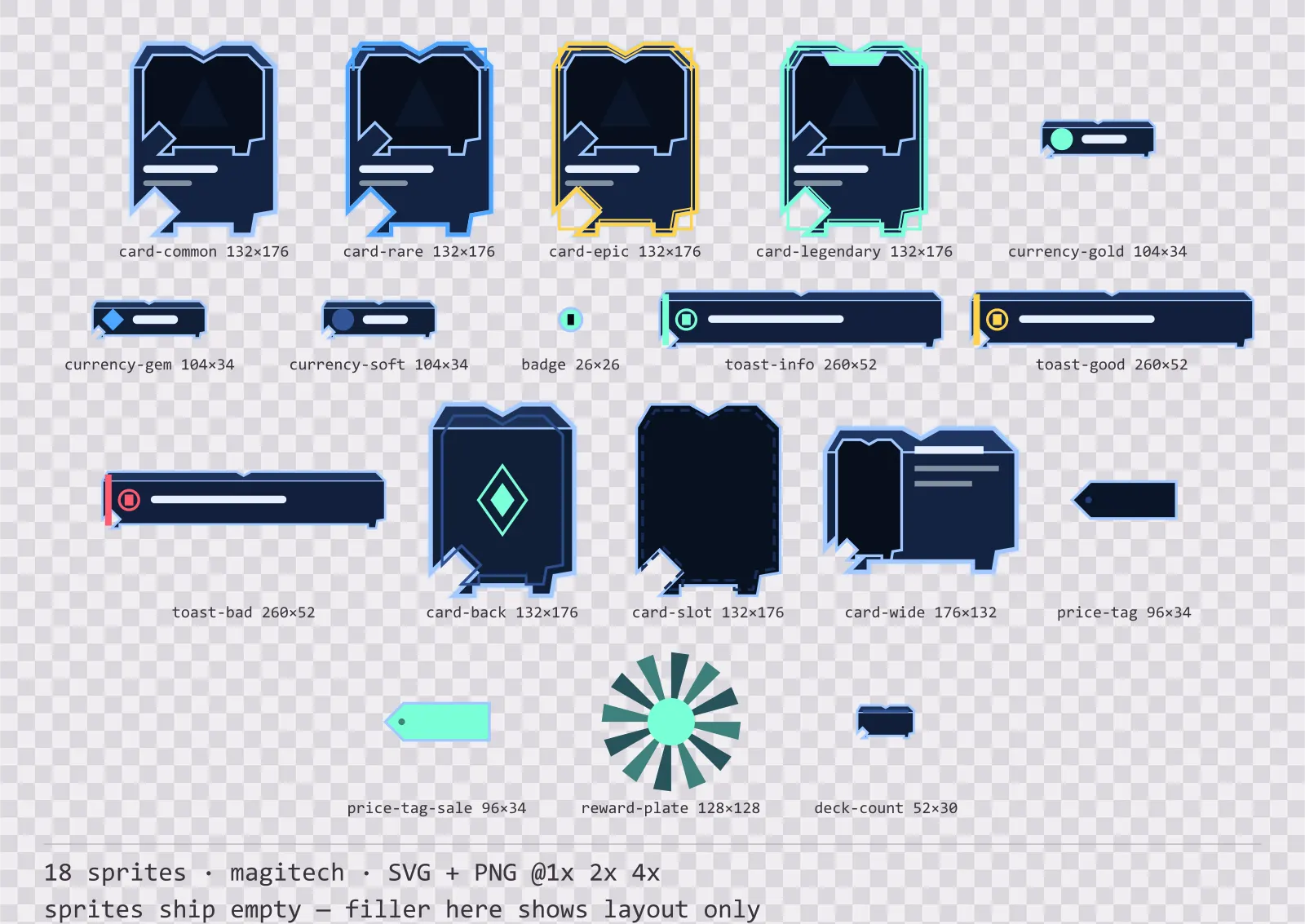
18 magitech card, currency and notification components for dark interfaces — lab navy with aether cyan accents. SVG plus transparent PNG at 1x, 2x and 4x.
Aetherlab Character Sheet
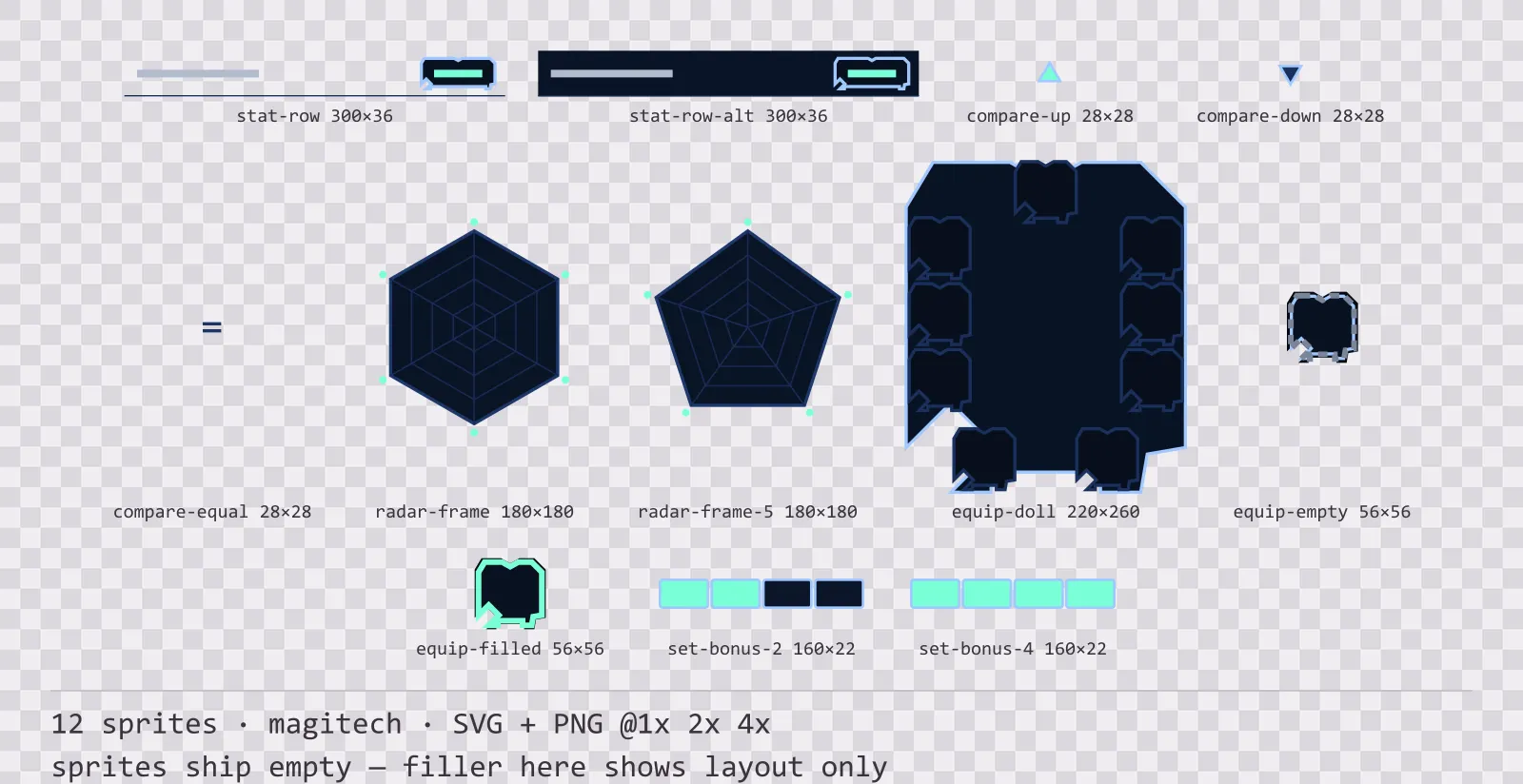
12 magitech character sheet and stat widgets for dark interfaces — lab navy with aether cyan accents. SVG plus transparent PNG at 1x, 2x and 4x.
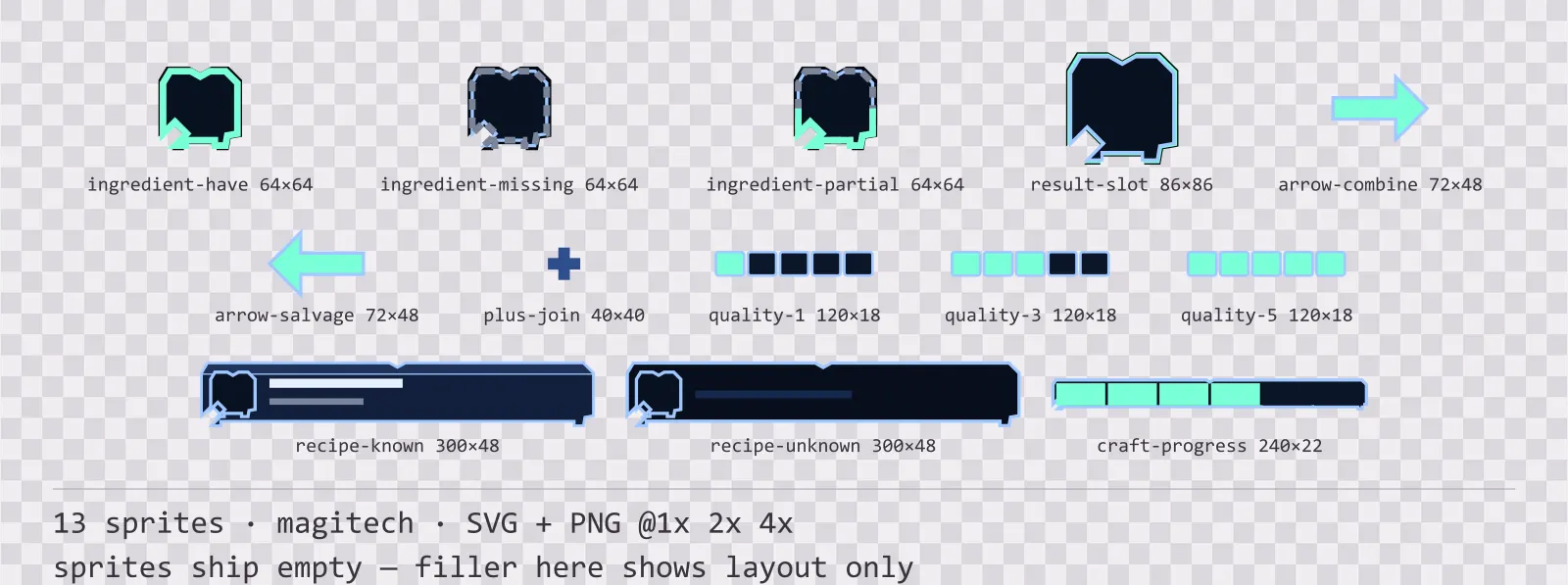
Aetherlab Crafting UI
13 magitech crafting and recipe widgets for dark interfaces — lab navy with aether cyan accents. SVG plus transparent PNG at 1x, 2x and 4x.